
Inspiring Residential Rehab | We Level Up Treatment Centers
Transform your life with the help of We Level Up Treatment Centers. Our residential treatment program provides comprehensive care in a nurturing environment designed to assist you in overcoming addiction and achieving lasting recovery. Contact us to get all the necessary information and start your path to sobriety today.
Clinically Reviewed by Lauren Barry, LMFT, MCAP, QS
Medically Reviewed by Ali Nikbakht, PsyD
Updated on October 2, 2025 — Editorial Policy | Research Policy | Privacy Policy
Inspiring Residential Rehab | We Level Up Treatment Centers
Transform your life with the help of We Level Up Treatment Centers. Our residential treatment program provides comprehensive care in a nurturing environment designed to assist you in overcoming addiction and achieving lasting recovery. Contact us to get all the necessary information and start your path to sobriety today.
Clinically Reviewed by Lauren Barry, LMFT, MCAP, QS
Medically Reviewed by Ali Nikbakht, PsyD
Reviewed / Updated: October 2, 2025 — Editorial Policy | Research Policy | Privacy Policy
What Is Residential Rehab?
Residential rehab means living full-time at a licensed treatment center where your day is structured around recovery. Unlike outpatient programs, Inpatient care offers:
- 24/7 medical and therapeutic support
- Removal from triggers that may fuel substance use or relapse
- Daily structure: therapy sessions, group support, wellness practices
- A safe, supportive community where recovery is the shared goal
This type of care is best for people who need stabilization. It is also for those with co-occurring disorders. Additionally, it helps those who need a longer-term setting to overcome addiction.
Challenges of modern life significantly impact mental health, sometimes resulting in mental health disorders or addictions. Both groups of conditions can be treated and managed. Usually, the hardest part is realizing you need help. It is also important to find reliable Inpatient treatment centers to support you. There are many levels of care. Inpatient treatment is the most effective because it provides benefits that other levels cannot.
Understanding Residential Rehab
Residential treatment is a way to help people with mental health issues and substance addiction. It means staying in a facility for a long time. It offers structure, 24/7 care, and medical assistance when needed. Patients follow up on a routine during their stay, get nutritious meals, and stay active. They become a part of a community and keep in touch with their family and friends, who can visit them.
Typically, Inpatient treatment centers combine different types of therapies. We Level Up Network uses a holistic approach to empower the body, mind, and spirit. We do so by combining traditional and alternative approaches to mental health and treatment. We rely on individual and group psychotherapy, recovery coaching, and mindfulness. Our caring and knowledgeable staff works to improve programs all the time. However, we need dedication and engagement for the recovery program to succeed.
Finally, Inpatient treatments help with recovery and rehabilitation. They also help people gain skills and grow as individuals.
If you feel overwhelmed by addiction and mental health issues, Inpatient treatment can help you manage your symptoms. You can also work on your recovery with the support of onsite staff. We Level Up Treatment Centers offer a 24/7 rehab program for both substance use and mental health disorders. We can help patients with alcohol and drug addictions. We also support those facing mental health issues. These problems can make treatment harder to manage.
Why Choose Residential Rehabilitation?
Identifying the most effective treatment is an important decision for addicts, their loved ones, and their health professionals. Without a doubt, it can be a time of uncertainty and anxiety. But it is also a vital step to recovery. Many useful approaches exist, from community-based care to National Health Service programs to Inpatient treatment centers.
A residential inpatient program is available for many types of addictions. These include substance addictions like drugs and smoking. They also cover behavioral addictions such as gaming, pornography, and shopping.
One of the main reasons to choose a 24/7 rehab program is that they are better at finding the root causes of addiction. Consequently, patients come to terms with their illness and learn to create healthy strategies for coping once they leave the program. This is an essential element of change, leading to a long-term recovery.
Skip To:

We want to explain the idea of Inpatient treatment. We will help you decide if it is the right choice for you. Learn the benefits and contact We Level Up Treatment Centers for more information. Join one of the best Inpatient treatment facilities.
Is Residential Treatment Right for You?
We Level Up. Inpatient treatment best accommodates adults 18+ who require treatment within a structured, inpatient setting. It helps with personal healing and builds a strong sense of community. This can be helpful for anyone facing addiction or mental health issues. Some types of clients really benefit from Inpatient substance abuse treatment and mental health inpatient programs.
- Those who are more susceptible to experiencing substance withdrawal symptoms.
- People over the age of 60 struggle more with the detox phase of the treatment.
- Those who have relapsed.
- Patients who have attempted less intense levels of treatment that were unsuccessful.
- Individuals who struggle with both mental health issues and addiction problems at the same time.
- Patients who struggle with co-occurring addictions.
- Clients who have medical conditions.
Residential inpatient rehab is one of the most effective treatment options. It can help you regain, maintain, or improve the abilities you need for daily life. These abilities may be physical, mental, and/or cognitive (thinking and learning).
Intensive mental health and addiction treatment helps patients stabilize their symptoms. It also aids in creating a plan for managing life as it happens.
Some Of The Direct Benefits of Long-Term Residential Treatment
1. Constant Care
Having 24-hour care on-site, with a medical team, provides effective and complete intensive care and treatment. The National Treatment Agency report found that the best residential centers helped complex users the most. These users often do not benefit from cheaper community treatment
2. Removal of Temptations
Choosing residential care and treatment helps patients escape the stresses and temptations of their daily lives. This is especially useful for patients whose everyday lives may contribute to their harmful addictive behavior.
3. Time and Space to Recover
By stepping away from their daily lives, addicts can find time and space to reconnect with themselves. This helps them understand their addictive behavior better. The intensive residential care provided allows patients to rediscover themselves physically and emotionally. A good residential center provides a peaceful and friendly environment for recovery. Centers like We Level Up Treatment Centers are examples of this.
4. A positive Environment
Residential care provides ongoing support from people who understand your situation. Everyone is there to help addicts recover and work towards lasting recovery. 24/7 rehab program centers often have integrated medical and counseling staff who can offer many types of support.
5. Specialist Treatment Programs
Residents who need help can join a medically supervised program. This program helps stabilize or detoxify them. It removes physical dependence on harmful substances or behaviors.
When looking at residential treatment centers, remember the benefits of this type of care. Make sure you choose a quality center. This choice will boost your chances of success and long-term recovery. You will also have a better experience on your path to being free from addiction.
Types of Aftercare Following Residential Rehab
Completing a residential rehab program is a powerful milestone in recovery—but it’s only the beginning. Sustained sobriety requires ongoing support, structure, and connection. That’s where aftercare comes in. Aftercare includes services and strategies that help people return to daily life. It also helps them keep the progress they made in treatment.
1. Outpatient Treatment Programs
Outpatient programs offer continued therapeutic support without requiring a person to live on-site. These can range from a few hours a week to more intensive daily schedules.
2. Sober Living Homes
Also known as transitional housing, these are substance-free living environments that offer stability and community after rehab.
3. Peer Support Groups
Mutual aid groups provide a sense of belonging and long-term encouragement. They are free, widely available, and often lifelong parts of a person’s recovery journey.
4. Individual Counseling and Therapy
Some people also benefit from specialized therapy such as Cognitive Behavioral Therapy (CBT), EMDR (for trauma), or Dialectical Behavior Therapy (DBT).
5. Family Therapy and Support
Addiction affects not just the individual but the entire family system. Continuing therapy that includes loved ones can help repair relationships, set healthy boundaries, and foster a supportive environment. Family involvement can also educate loved ones about addiction and recovery, reducing stigma and improving long-term outcomes.
Patient Stories
The case examples presented here reflect authentic clinical experiences, though names and personal identifiers have been changed for confidentiality.
- “M., 29 — Breaking the Cycle”
After years of opioid use, M. entered residential rehab feeling hopeless. The structured routine and daily therapy gave her stability. “For the first time in years, I felt like I wasn’t alone.” She left with coping skills and an aftercare plan. - “T., 46 — Restoring Self-Worth”
T. struggled with alcohol for decades and felt ashamed. Detox was hard, but group therapy and mindfulness helped him regain confidence. “I started to believe in myself again.” Today, he’s reconnecting with loved ones. - “K., 38 — Rediscovering Purpose”
K. turned to prescription drugs after trauma. In rehab, she found healing through therapy and holistic practices like yoga. “It helped me see my life beyond addiction.” She left feeling grounded and hopeful.
Illustrative Clinician Perspectives (quotes)
“Residential rehab provides a safe space where patients can reset and rebuild their lives.” — Clinical Director“Lasting recovery comes from rediscovering purpose and building support systems.” — Licensed Therapist
Services We Provide
Every residential treatment plan at We Level Up is tailored to individual needs. Our team takes a holistic approach, addressing not just addiction but also overall health and wellness. We use a combination of therapies, medical care, and supportive programs to heal the whole person. Most importantly, we provide a continuum of care and support to help clients succeed long-term.
1. Medication-Assisted Detox
Detox is often the first step in addiction recovery. The goal is to safely cleanse the body of drugs or alcohol while managing withdrawal symptoms. At We Level Up, our medication-assisted detox is monitored 24/7 by medical professionals. Doctors may prescribe FDA-approved medications to reduce cravings and ease discomfort. Attempting to detox alone can be overwhelming and carries a high risk of relapse. Choosing a professional detox program provides safety, comfort, and the best chance for success.
Explore our Medical Detox Programs.
2. Family Support Groups
Recovery is not just about the individual—it’s also about family healing. At We Level Up, we involve loved ones through family therapy and support groups. These sessions help families:
- Develop communication and coping skills
- Address underlying conflicts
- Create a supportive environment at home
By strengthening family bonds, clients have a better foundation for long-term recovery after leaving treatment.
Learn more about our Family Program.
3. Addiction Treatment
We provide personalized treatment for a wide range of addictions, including alcohol, opioids, stimulants, and more. Our programs combine behavioral therapy, counseling, and structured recovery activities to help clients:
- Build healthier coping skills
- Develop resilience against relapse
- Establish new daily routines and habits
4. Mental Health Treatment
Mental health challenges such as depression, anxiety, and trauma often go hand-in-hand with substance use. Our programs provide professional care for a variety of mental health disorders. Services include therapy, medication management, and wellness strategies to:
- Stabilize emotional health
- Prevent crises
- Rebuild relationships
- Restore balance and overall wellness
Discover our Mental Health Treatment Programs.
5. Dual Diagnosis Care
Many individuals in recovery face both addiction and co-occurring mental health disorders—a condition known as dual diagnosis. Treating only one issue often leads to relapse. That’s why We Level Up provides comprehensive dual diagnosis care, addressing both challenges simultaneously.
Our approach may include:
- In-depth psychological assessments
- Individual and group therapy
- Trauma-informed care
- Medication management
- Coping skills training for long-term resilience
By caring for the whole person, we help clients manage addiction and mental health issues. This leads to lasting recovery.
Learn more about our Dual Diagnosis Programs.
First-class Facilities & Amenities
Trusted Integrated Addiction & Mental Health Rehabilitation Treatment
Rehab Centers TourEstablished Addiction Centers. Serene Private Facilities. Inpatient rehab programs vary.
Addiction Helpline (844) 597-1011Comprehensive recovery success experience, backed by a Team w/ History of:
15+
Years of Unified Experience
100s
5-Star Reviews Across Our Centers
10K
Recovery Success Stories Across Our Network
- Low Patient to Therapist Ratio
- Onsite Medical Detox Center
- Comprehensive Dual-Diagnosis Treatment
- Complimentary Family & Alumni Programs
- Alumni Coaching, Recovery & Personal Development Events
Mental Health & Addiction Services We Offer
If you have trouble functioning due to any of the following issues, the We Level Up Program may help.
We Offer Residential Treatment for Numerous Mental Health Disorders, such as:
Our Residential Treatment Centers can Also Assist you with Overcoming Addictions:
- Alcoholism
- Cocaine addiction
- Heroin addiction
- Meth addiction
- Opiate addiction
- Prescription Drug Addiction
Residential treatment is not limited to the mentioned mental health and addiction issues. We Level Up Treatment Centers help clients manage various issues related to mental illness and substance use disorders. We provide resources that improve their quality of life.
How to Overcome Addiction with Our Programs
We run several 24/7 rehab programs to help you overcome addiction and regain control of your life. Our programs are listed below, and each can be tailored to meet your needs. We don’t expect you to know exactly what you require, and that’s where we can help, whatever your current situation is.
1. Detoxification
Our team includes skilled general nurses, nurse prescribers, mental health nurses, and health care assistants. They will help you manage withdrawal symptoms during detox. Most importantly, you’ll be monitored 24 hours.
2. Therapeutic Treatment Program
This caring and abstinence-based program aims to support your mental, emotional, and spiritual health.
3. Extended Treatment
This is a great option for clients who have progressed through 12 weeks of treatment. This program is designed as a stepping stone to living independently in the community.
4. Third Stage
Staff support is given regularly. This includes weekly support groups and one-on-one advice, guidance, and counseling when needed. In addition, staff provide telephone help 24/7.
Most residential treatment centers offer some of these programs. What makes us different is our focus on personalizing each experience. This dedication will help you overcome addiction with our programs. We consider your needs, circumstances, and preferences to tailor specific programs that address your body, mind, and spirit. Our holistic approach aims not just for recovery but also for growth and development.
Specialized, Accredited, 5-Star Reviewed, Evidence-based Addiction & Mental Health Programs. Complete Behavioral Health Inpatient Rehab, Detox plus Co-occuring Disorders Therapy.
CALL(844) 597-1011End the Addiction Pain. End the Emotional Rollercoaster. Get Your Life Back. Start Drug, Alcohol & Dual Diagnosis Mental Health Treatment Now. Get Free, No-obligation Guidance by Substance Abuse Specialists Who Understand Addiction & Mental Health Recovery & Know How to Help.
Admission Process
You can easily secure the help you need through We Level Up Treatment Centers. Our admissions coordinators understand and have been where you are, and our admissions process is simple.
- Call us to learn more about our residential treatment and other aspects of the rehab process. Your call is private and confidential, and there is never any obligation.
- If you choose a We Level Up residential treatment center for rehab, the first step is a pre-admission assessment. The professional you will talk to will ask about your medical and mental health history. They will also ask about your substance use and any past treatments you may have had. We collect this data to tailor your residential treatment program and ensure its success.
- The next step is an insurance check. We accept all major insurance, such as Blue Cross Blue Shield rehab coverage and Aetna rehab coverage. Your stay with us may be fully or partially covered by your insurance plan. During our call, we can check what your plan covers.
- If your plan doesn’t cover our residential treatment, you can pay for it yourself. We can talk about payment options with you.
- We will give you a dedicated treatment consultant. This person will help connect you with residential treatment centers. They will make sure your treatment process goes smoothly.
- The next steps of the process are arranging your transfer and arrival. We can help you organize your transfer, no matter where in the US you are. We will agree on your time of arrival so our staff can welcome you.
- Finally, your recovery can start. You will get a tour of the facility, receive your schedule, and meet our attentive staff.
Between your first call and joining us, you can make all the necessary preparations for the residential treatment. You might need to make arrangements at work or at home, choose things to bring with you, do medical checkups, etc. You can always consult with us on documents you need to bring or anything else you are not certain about. We are here to make your recovery as easy as possible in every possible sense.
Effective Factors in Long-Term Residential Treatment
Long-term residential treatment programs are often more beneficial than short-term solutions. Research shows that the longer a patient stays in the rehabilitation center, the more effective the treatment is. This is related to how long-term residential treatment works. It allows patients to focus on recovery and work on the underlying issues behind the obvious manifestations. It gives enough time to change bad behaviors into good ones. This helps build a strong foundation for lasting well-being.
Essential factors for effective long-term residential treatment are mostly related to the quality of the staff. Having experts and licensed professionals from medicine and psychology ensures a complete approach to treating disorders and addictions. It creates opportunities for mixing methodologies and developing specialized programs backed by evidence-based approaches.
High-end rehab centers often have amenities that make long-term stays comfortable and welcoming. Having comfort while in long-term residential treatment contributes to peace and much-needed focus on oneself.
What Happens After Long-Term Residential Treatment?
After a long-term residential treatment ends, much can happen. People typically transition to an aftercare plan designed to support ongoing recovery. Depending on what people need and want, they can include:
- Outpatient therapy
- Support groups
- Ongoing progress checks
These can be part of their plan. We Level Up Treatment Centers have an alumni program. This program helps people stay connected and get support when they need it.
To keep the progress made during treatment, it’s important to build a support system. This system should include family, friends, and the local community. Working on yourself and staying committed for life are key to building a sustainable lifestyle. They also help prioritize your mental health and well-being.

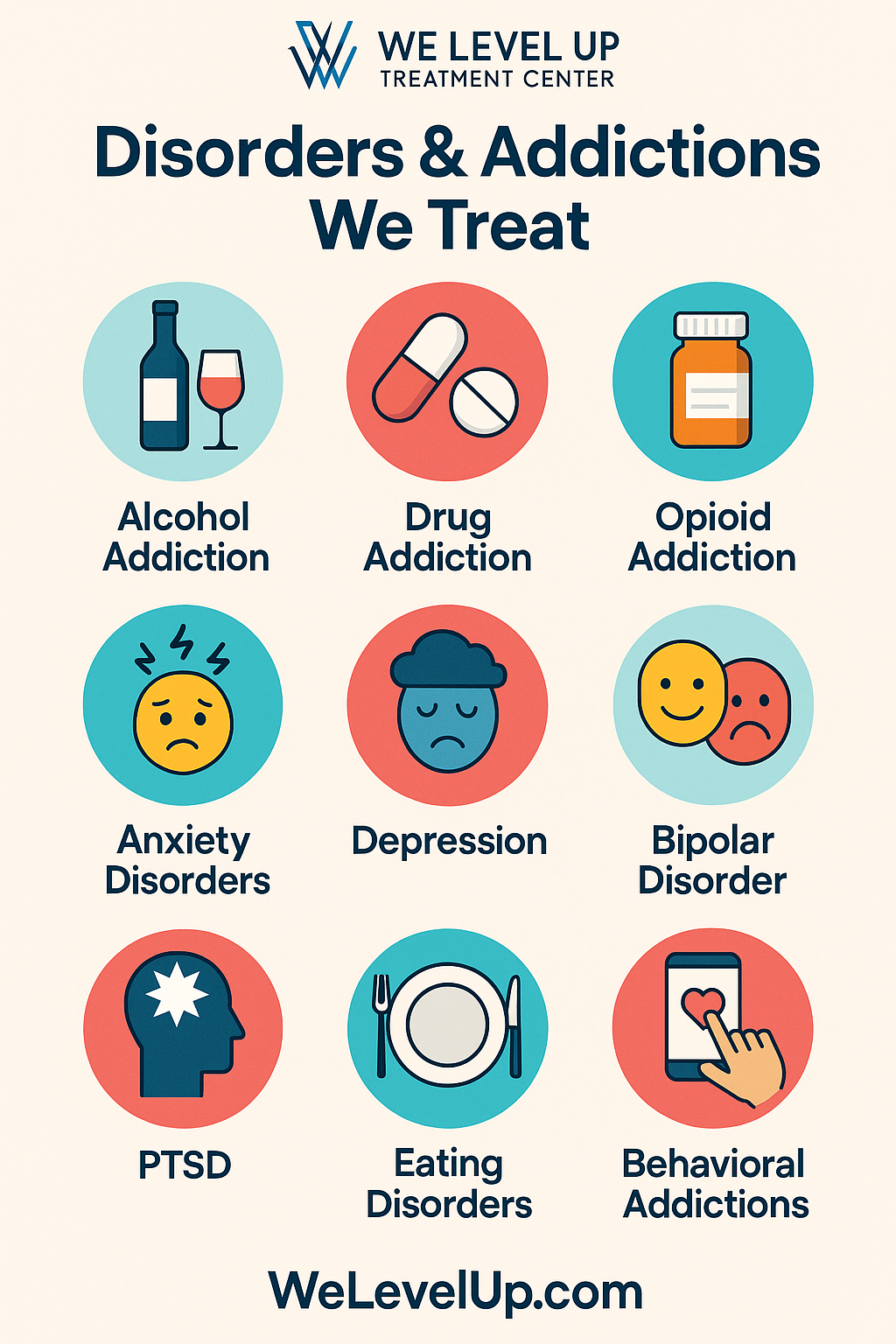
Disorders & Addictions We Treat
At We Level Up Residential Treatment Centers, we understand that recovery looks different for everyone. Addiction and mental health challenges often overlap, and each person’s journey requires personalized care. That’s why our rehab programs for homes help with many substance use disorders and mental health issues.
A. Substance Use Disorders We Treat
Our team provides specialized care for addictions, including:
1. Alcohol addiction
One of the most common and dangerous dependencies requiring medical detox and structured rehab.
2. Opioid addiction
Including prescription painkillers, heroin, and fentanyl, with treatment that combines medication-assisted detox and therapy.
3. Stimulant addiction
Substances such as cocaine, methamphetamine, and prescription stimulants are managed with behavioral therapies and relapse-prevention planning.
4. Benzodiazepine addiction
Safe detoxification and long-term therapy for dependence on medications like Xanax, Valium, or Klonopin.
5. Polysubstance abuse
When multiple substances are used together, requiring integrated treatment to manage complex withdrawal and recovery needs.
B. Mental Health Disorders We Treat
24/7 rehab program at We Level Up also focuses on mental health conditions. These conditions can worsen addiction, such as:
- Depression and anxiety disorders
- Post-Traumatic Stress Disorder (PTSD)
- Bipolar disorder
- Borderline Personality Disorder (BPD)
- Obsessive-Compulsive Disorder (OCD)
- Eating disorders, when tied to addiction and trauma
Our dual diagnosis approach helps clients get treatment for both addiction and mental health issues at the same time. This leads to better long-term results.
Reach Out to Us
Get the help you deserve to live a fulfilling life free of addiction and emotional pain. We Level Up Treatment Centers can help you build a better future. Reach out today and start bringing healing back into your home for all family members and yourself.
FAQ About Residential Rehab
What is residential treatment?
Residential treatment is an immersive, structured therapeutic approach to treating mental health conditions and substance addictions. It means that people live in a facility for a set time. They get support and care all day and night. The goal is to create a safe space for recovery and self-development.
Is the residential treatment effective?
Residential treatment is the best way to help with mental health issues and substance addictions. This is especially true for those who need a lot of support. Of course, the success of any treatment, including a residential one, depends on the clients, their engagement, and commitment.
What are the signs it´s time to look for residential treatment centers?
If your problem is seriously impacting your life, it’s important to get help. If you have major mental health issues or substance abuse symptoms, seek professional support. If you have tried outpatient treatment before or had relapses, you may benefit from residential treatment.
How long does residential treatment last?
The length of residential treatment will vary. It depends on individual needs and how serious the problem is. They can be as short as a few weeks or as long as 90 days. Some might even extend their stay. The key point is that the duration is set with help from professionals. It can change based on progress.
What are the benefits of residential treatment?
Residential treatment centers can offer 24/7 medical assistance and psychological support, a structured environment, and individualized treatments. Patients can enjoy a supportive community and dual-diagnosis treatments. They can focus on their recovery while benefiting from privacy and comfort.
Does insurance cover residential treatment?
Your residential treatment can be fully or partially covered, depending on your insurance plan. We Level Up Treatment Centers accept most insurance plans. We can quickly check your coverage by phone. You can also consult your insurance agents for more details on insurance plans.
What are holistic residential treatment options?
The holistic approach to treatment means looking at the body, mind, and spirit. In short, it treats a person as a whole, not just the problem they have. It typically consists of different therapies, traditional and alternative ones, experiential activities, mindfulness, and practices related to nutrition and exercise. It fosters recovery and overall personal growth.
Resources
We Level Up California – Explore our California facility offering comprehensive addiction and mental health treatment services, including inpatient care and dual diagnosis support.
We Level Up New Jersey – Discover our New Jersey center providing specialized residential treatment programs for substance use and co-occurring mental health disorders.
We Level Up Washington – Learn about our Washington facility offering personalized care for individuals facing addiction and mental health challenges.
We Level Up Florida – Find information on our Deerfield Beach location, providing outpatient services and admissions support for those seeking treatment.
Meet the We Level Up Team – Get to know our dedicated team of professionals committed to guiding clients through their recovery journey with compassion and expertise.
Sources
Greenfield, L., Burgdorf, K., Chen, X., Porowski, A., Roberts, T., and Herrell, J. (2004). Effectiveness of long-term residential substance abuse treatment for women: findings from three national studies. The American Journal of Drug and Alcohol Abuse, [online] 30(3), pp.537–550. doi:https://www.doi.org/.
Experience Transformative Recovery at We Level Up Treatment Centers.
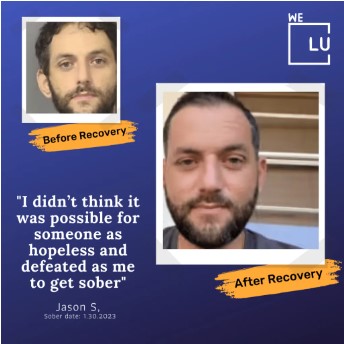
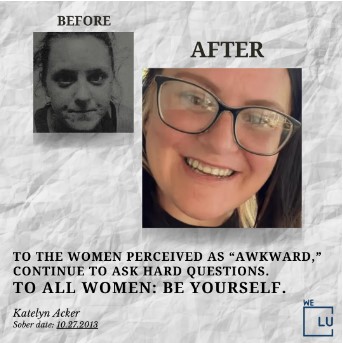
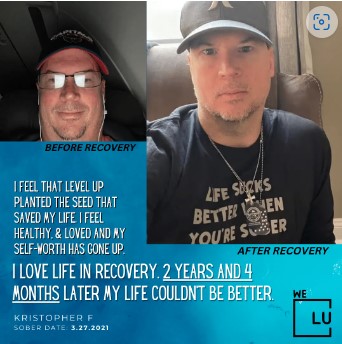
See our authentic success stories. Get inspired. Get the help you deserve.
Start a New Life
Begin with a free call to an addiction & behavioral health treatment advisor. Learn more about our dual-diagnosis programs. The We Level Up Treatment Center Network delivers recovery programs that vary by each treatment facility. Call to learn more.
- Personalized Care
- Caring Accountable Staff
- World-class Amenities
- Licensed & Accredited
- Renowned w/ 100s 5-Star Reviews
We’ll Call You